



News
SBP Group Enters the Era of Domesticated "10,000-Liter Scale" Biologic Production Lines
Release Date: 2026-04-13
From "emerging and cultivating" to a "strategic pillar", as China's biopharmaceutical industry enters a new stage of high-quality development, mere capacity expansion is no longer the sole measure of a company's core competitiveness. The focus of market competition is gradually shifting towards a dual breakthrough in full-chain autonomy and control, and ultimate cost-effectiveness. Recently, Chia Tai Tianqing (CTTQ), a core enterprise of Sino Biopharmaceutical Limited (SBP Group, 1177.HK), successfully commissioned another 4x10,000L scale biologic production line. While taking the lead in China in achieving full-chain domestic substitution for key equipment and core materials, it has also deeply integrated AI technology to empower production and operations, injecting new momentum into the high-quality development of the company's biopharmaceutical industry.
Breaking Through the Bottleneck of Core Technologies
As a core segment of the high-end pharmaceutical field, biologics are characterized by complex production processes and long manufacturing cycles. Taking monoclonal antibody drugs as an example, the production process generally includes three stages: upstream cell culture, downstream separation and purification, and aseptic formulation and filling. The entire process, from production to inspection and release, takes about 3-4 months. The manufacturing process for biologics requires an "end-to-end" integrated design during research and development, as any change in any step may cause variations in quality. However, China's biopharmaceutical industry chain has long faced the "bottleneck" problem of dependence on imports for high-end manufacturing equipment and key raw materials. This not only leads to long supply chain cycles and high production costs but also poses risks such as insufficient technological security and control, lagging maintenance, and a lack of supply chain stability.
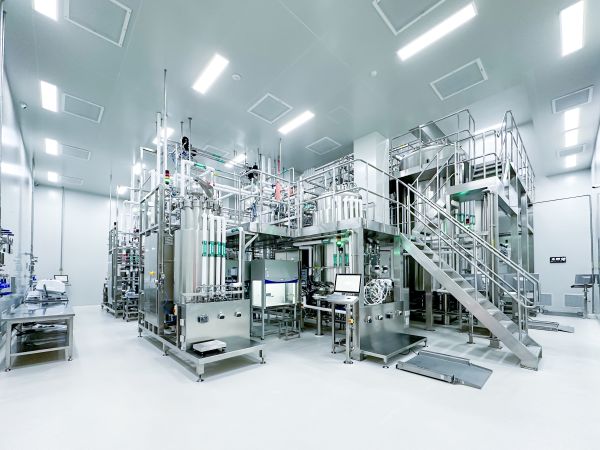
CTTQ's newly built production workshop, spanning approximately 3,000 square meters, fully adopts domestically manufactured 4x10,000L stainless steel bioreactors. At the deeper level of core materials, the company leverages its R&D and production advantages in the "trinity" of APIs, chemical drugs, and biologics to achieve independent development and commissioned production of core culture media formulations. Through joint development with local suppliers, the ligand density and matrix structure of chromatography media used in the purification stage have been further optimized. Taking monoclonal antibody production as an example, the purification process accounts for 50%-80% of the cost of drug substance manufacturing. In the critical field of affinity chromatography media, the domestic market share was once less than 20%. This full-chain domestic substitution not only breaks down technological barriers but also significantly reduces the production cost per batch, markedly improving drug accessibility and supply chain resilience.
From a "Single Production Line" to a "Win-Win for the Industry Chain"
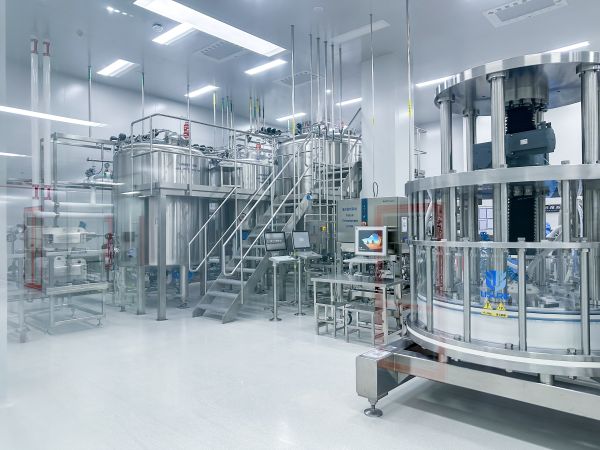
The domestic substitution of the entire production line has a more profound significance: it serves as a "test bed" and a "connector," promoting joint research and collaborative development across the upstream and downstream industrial chain. During the project's advancement, CTTQ formed a deeply integrated and collaborative force with outstanding domestic suppliers. With deep involvement from risk control and automation assurance to solution design, they worked with domestic reactor manufacturers to debug and optimize, effectively eliminating batch-to-batch variability and successfully solving the "scale-up" challenge from laboratory pilot scale to 10,000-liter commercial production.
The virus removal filtration membrane is the final safety checkpoint at the end of the purification process for biologics like monoclonal antibodies, just before filling. Targeting the virus removal filtration membrane technology, long considered a "bottleneck", CTTQ collaborated with domestic membrane material suppliers. Through repeated process validation and membrane material modification, they successfully achieved the replacement and application of high-standard domestic membrane materials. This innovation-driven collaborative model resolves the risks of a single supply chain and technological silos. By sharing data and co-establishing standards, it firmly places the initiative for industrial development in the hands of local enterprises.
AI Empowerment Forging "New Quality Productive Forces"
If full-chain domestication is the "steel framework" for building an autonomous and controllable supply chain, then digitalization and intelligence are the "smart brain" driving the efficient operation of this modern factory. On the production side, the company has deeply integrated AI technology, promoting the upgrade of production lines from "automation" to "intelligence".In the production process of a certain monoclonal antibody, a fine-tuned control driven by AI ultimately led to an approximately 20% increase in expression levels. Furthermore, the company has built a vast knowledge base covering production quality and EHS (Environment, Health, and Safety), enabling predictive warnings of potential risks to ensure absolute compliance and safety in production. The workshop's production lines are integrated with a data acquisition and supervisory control system, which clearly presents real-time dynamic monitoring data during operation and data from the entire drug production process, achieving the goals of visualized production processes, digitalized quality management, and refined energy management.
This lean production capability, empowered by AI, directly translates into a gross profit margin higher than the industry average, ensuring high product quality and a continuous, stable supply. To date, CTTQ has built six 10,000-liter scale biologic production lines, bringing the total biologic production capacity to 86,000 liters. SBP Group will follow a path of technological breakthroughs, industrial synergy, and intelligent upgrades, adhering to independent innovation and high-end manufacturing to provide stronger support for improving public access to medicines and contributing to the Healthy China initiative.
- Previous:Jointly Promoting New Development in China-UAE Economic and Trade Cooperation! China-UAE Business and Investment Promotion Conference Held in Beijing, Eric Tse Invited to Attend the Opening Ceremony
- Next:Once-Yearly Dosing, Targeting Cardiovascular Disorders, First US Patient Enrolled in China-US Phase II Clinical Trial of Hygieia's Kylo-11