




News
From Injections to Patches: SBP Group’s New GLP-1 Weight-Loss Candidate CPX301 Receives FDA Clearance to Initiate Clinical Trials of Its Dissolvable Microneedle Product
Release Date: 2026-08-24
Sino Biopharmaceutical Limited (SBP Group) takes the lead again in the "macromolecule patch" field! CPX301, the world's first weight loss dissolvable microneedle patch to receive clearance for a clinical trial from the U.S. Food and Drug Administration (FDA), has entered the clinical development stage. CPX301 is a GLP-1 receptor agonist dissolvable microneedle patch developed by Beijing Tide Pharmaceutical, a core enterprise of SBP Group (1177.HK). It recently has received clearance for a clinical trial from the FDA and is intended for weight management. Leveraging Beijing Tide's mature dissolvable microneedle technology platform, CPX301 features convenient administration, efficient delivery, sterility and safety, and convenient storage and transportation. It is expected to provide a brand-new administration option for people requiring long-term weight management.
How does a patch that can be removed in 5 minutes deliver macromolecular drugs?
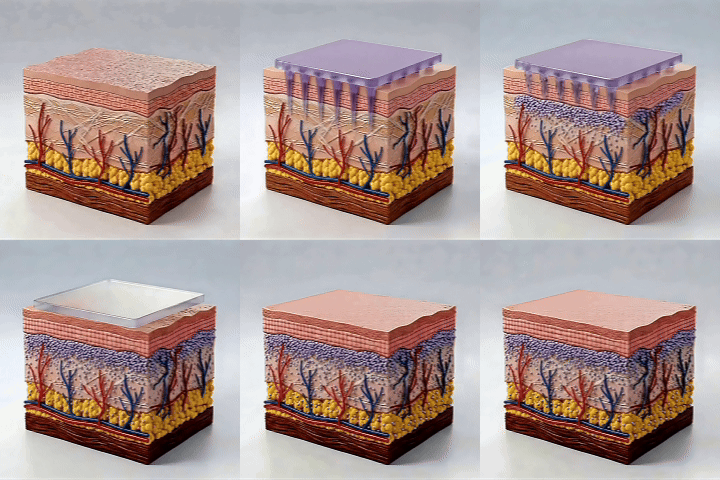
In turning GLP-1 from an "injection" into a "patch", the primary difficulty lies in how to break through the skin's natural barrier. GLP-1 receptor agonists are peptide drugs with large molecular weight and high difficulty in transdermal penetration, making it hard for traditional patches to achieve effective delivery. Dissolvable microneedle technology provides a different pathway, physically piercing the stratum corneum with micrometer-scale needle tips to deliver the drug directly to the epidermis and superficial dermis, where it is absorbed by capillaries and enters systemic circulation.
As a "truly dissolvable" microneedle (dissolving microneedle patch), the CPX301 needle body is made of biocompatible materials and manufactured using a strict sterile production process. After the patient applies it for 5 minutes, the microneedles completely dissolve, and the patch can then be removed. Compared to administration by injection, dissolvable microneedles do not touch nerve endings, causing no significant pain and generating no sharp medical waste. Compared to similar oral formulations, CPX301's bioavailability is increased by more than 50 times, further demonstrating the potential of dissolvable microneedle in overcoming the absorption barrier for macromolecular drugs. In addition, the product is small and easy to carry, which is expected to further improve drug accessibility.
A seemingly simple patch is actually a complex formulation resulting from the intersection of multiple disciplines such as materials science, pharmaceutics, precision manufacturing, and quality control, and it has high technical barriers. Focusing on these key aspects, Beijing Tide Pharmaceutical and its partner Youwe (Zhuhai) Biotechnology Co., Ltd. have jointly built a dissolvable microneedle technology platform, establishing core technical capabilities such as segmented drug loading, sterile production, and high delivery efficiency, and achieving capabilities for efficient enrichment of the drug in the effective area of the needle tip and batch-to-batch uniformity control.
With the support of related projects from the National Key Laboratory of Drug Regulatory Science, CPX301 is also tackling key quality control technologies, promoting the large-scale transformation of the product from a technology platform to clinical application. Currently, the clinical trial application for CPX301 in China is also progressing simultaneously and is expected to benefit a broader patient population.
As weight loss enters long-term management, convenience of administration becomes a key variable
Obesity is becoming one of the most serious public health challenges of the 21st century. It is associated with the risk of various metabolic diseases such as type 2 diabetes mellitus and non-alcoholic fatty liver disease, as well as cardiovascular disorders, respiratory disorders, malignant neoplasms, and mental health disorders. Data from the World Health Organization (WHO) shows that the number of adults with obesity worldwide has exceeded 890 million, and the total number of people who are overweight exceeds 2.5 billion. The overweight and obesity rate among adults in China has surpassed 50%, meaning 1 in every 2 adults is above the standard weight.

In recent years, peptide drugs represented by GLP-1 receptor agonists have developed rapidly, significantly improving the effectiveness of weight management. However, as chronic disease management requires long‑term adherence, apart from therapeutic efficacy, ease of administration and patients' willingness for sustained use also contribute to its clinical value. Data show that the prevalence of needle phobia is 20%-50% among adolescents and 20%-30% among young and middle-aged adults. The dissolvable microneedle technology represented by CPX301 is expected to lower the psychological and operational barriers to long-term medication use, providing more options for people managing their weight.
As an important innovation platform for high-end formulations at SBP Group, Beijing Tide Pharmaceutical has long been deeply engaged in the field of transdermal drug delivery systems. It has established a modern transdermal technology system covering R&D, process scale-up, manufacturing, and quality control. Its product pipeline covers multiple therapeutic areas, including pain management, central nervous system, and metabolism. Currently, it has achieved a large-scale production capacity of 400 million patches per year.
By 2030, Beijing Tide Pharmaceutical is expected to launch 14 transdermal drug delivery products. Leveraging its long-accumulated capabilities in the R&D and industrialization of transdermal drug delivery systems, the company is further expanding into more complex formulations and novel drug delivery systems. It is also accelerating the clinical translation and global development of cutting-edge technologies to provide more convenient and safer treatment options for patients worldwide.
References:
[1] World Health Organization. Obesity and overweight. December 2025.
[2] McLenon J, Rogers MAM. The fear of needles: A systematic review and meta-analysis. J Adv Nurs. 2019 Jan;75(1):30-42. doi: 10.1111/jan.13818. Epub 2018 Sep 11. PMID: 30109720.
[3]HeinrichKH,CallahanCP.Prevalenceandoutcomesoffearofneedlesandassociatedpsychological conditions among patients managing diabetes. Value in Health. 2016; 19(3):A199–A200.
Declaration:
1. This press release is intended to facilitate the communication and exchange of medical information and is for reference by healthcare professionals only. It is not for advertising purposes.
2. The company does not recommend any drugs and/or indications.
3. The information contained in this press release is for reference only and cannot replace professional medical guidance in any way, nor should it be considered as a diagnosis or treatment recommendation. If you wish to understand specific disease diagnosis and treatment information, please follow the advice or guidance of a physician or other healthcare professional.