





News
Faster Drugs, Better Access? Eric Tse Attends Summer Davos, Improving the Global Medication System with Technological Innovation and Open Cooperation
Release Date: 2026-06-24
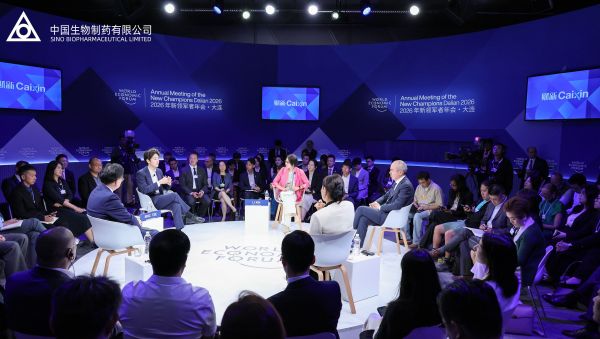
On June 23, the 17th Annual Meeting of the New Champions 2026 of the World Economic Forum (also known as the "Summer Davos Forum") opened in Dalian, Liaoning. Eric Tse, Chief Executive Officer of Sino Biopharmaceutical Limited (SBP Group, 1177.HK), Chairman of Chia Tai Tianqing, and Chairman of Beijing Tide Pharmaceutical, attended the meeting as one of the 14 co-chairs and, on the same day, attended the "Faster Drugs, Better Access? " roundtable forum, sharing the company's thoughts on global cooperation and improving patient accessibility.
A Chinese Example of Innovation-Driven Transformation
A year ago, the hot topic in the industry was still "Are China's innovative drugs ushering in their own DeepSeek moment? " With the rapid development of AI in the pharmaceutical industry, the topic of discussion among the roundtable guests today focuses on a new question—"Do faster new drugs mean better accessibility?"
At the forum, Eric Tse described the group's structural transformation over the past decade amidst the wave of pharmaceutical innovation and development in China. From a combination of generic and innovative drugs to a comprehensive innovation transformation, the group's revenue from innovative products has increased to about 50%, and the ratio of R&D expenses to revenue has grown to about 20%, with annual R&D expenses approaching 6 billion RMB. The group focuses on four core therapeutic areas: oncology, liver disease/cardiovascular metabolism, respiratory/autoimmune, and surgery/analgesia, has established ten industry-leading technology platforms, and has promoted the implementation of several major out-licensing deals. He pointed out that while its independent R&D capabilities have gained global recognition, SBP Group actively introduces innovative products through strategic cooperation with global multinational pharmaceutical companies. Through an open strategy of two-way empowerment, it helps more innovative and good drugs benefit patients worldwide.
Looking at the whole country, the total value of out-licensing deals for Chinese innovative drugs exceeded $130 billion last year, and the volume of global clinical operations undertaken by China reached a new high. Behind this are the demographic dividend of engineers in R&D, a complete medical industry chain, the advantage of vast population data, and the continuous improvement of the regulatory system. Based on these essential innovative advantages, as China's clinical quality and innovative strength become widely recognized internationally, Chinese pharmaceutical companies will also take on more responsibility for solving global health problems.
Providing Technological Breakthroughs for "Accessibility"
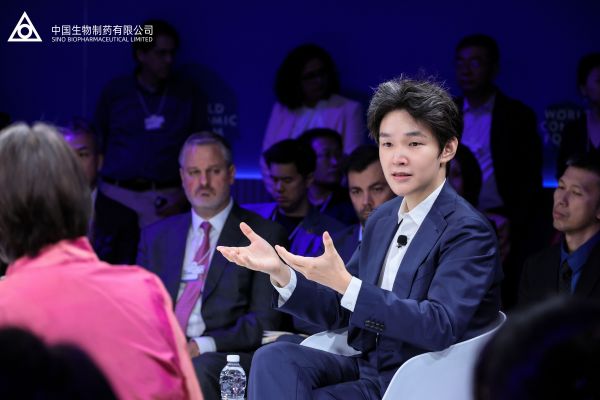
On the core issue of drug innovation and patient accessibility, Eric Tse also elaborated on SBP Group's technological breakthroughs. He gave an example: focusing on the field of cardiovascular disorders, the group is accelerating the clinical development of a once-a-year dosing regimen. If only one dose is needed annually in conjunction with an annual physical examination, it is expected to fundamentally reduce the potential future economic burden. In addition, oral therapies, compared to injections with the same efficacy, will also significantly reduce the pressure on hospital admissions. He called for including such therapies in the long-term pricing system of medical security schemes, using policy guidance to encourage a shift in the diagnosis and treatment philosophy from "treating disease" to "prevention".
In addition, to address the clinical needs of approximately 75 million people with viral hepatitis B infection in China, SBP Group has reached an exclusive strategic cooperation with GlaxoSmithKline (GSK) to accelerate the marketing process of the first-in-class (FIC) new drug Bepirovirsen in China, bringing a revolutionary breakthrough to the national goal of a functional cure for hepatitis B. Eric Tse pointed out that being guided by unmet clinical needs, creating long-term value for patients while reducing the socioeconomic burden, is the answer to achieving medical 'accessibility' from another dimension.
The Next Decade is a Decade of Cooperation
Facing the new landscape of more and more pharmaceutical companies participating in the global pharmaceutical market, Eric Tse said: "The next decade is a decade of cooperation". He pointed out that the application of AI technology is continuously improving R&D efficiency, but how to improve quality and efficiency under the complex global regulatory system remains a core challenge. It is difficult for Chinese pharmaceutical companies to truly achieve a leap to an international scale by going it alone—this is precisely the logic for breaking down barriers and deepening cooperation.
Currently, the operational efficiency of clinical trials in China has significant international competitiveness, and China has the ability to play a leading role in the global field of clinical trials and research. He suggested that in the future, China could take the lead, uniting with Asia-Pacific and "Belt and Road" countries to achieve simultaneous R&D and approval, thereby lowering the threshold for development financing and truly allowing innovative and good drugs to quickly reach a wider range of patients.
At the end of the forum, the moderator asked each guest to answer with one word: For faster new drugs to achieve better accessibility, what needs to change the most? Eric Tse's answer was—system. This also resonated with the guests present. Innovation itself is not the bottleneck; the answer lies in whether a system can be built that allows technological breakthroughs to truly benefit patients.
This year's Summer Davos Forum brought together over 1,700 leaders and innovators from business, government, and academia from more than 90 countries and regions. Centered on the theme of "Innovation at Scale," it focused on the new industrial era driven by artificial intelligence and cutting-edge technologies, contributing innovative wisdom and exploring paths for cooperative development for the world economy.
Declaration:
The copyright of this article is owned by the original author or the Company. It may not be used by reprinting, copying, filming, adapting, compiling, or other means without authorization. The portrait rights of the individuals appearing in this article belong to the individuals themselves. Unauthorized use is prohibited.