




News
Eric Tse Elected as a Council Member of the Yabuli China Entrepreneurs Forum: Restructuring Internally, Growing Externally, How Does SBP Group Achieve Counter-Cyclical Growth?
Release Date: 2026-09-06
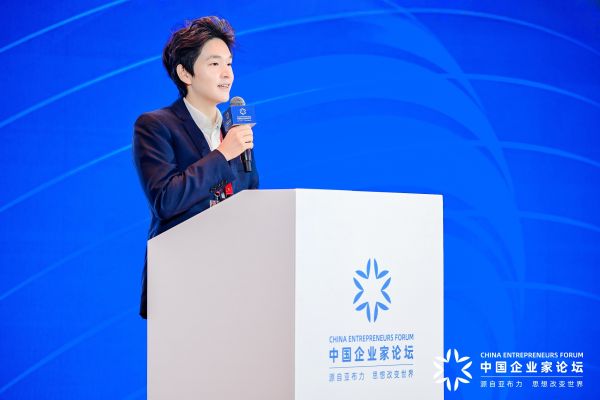
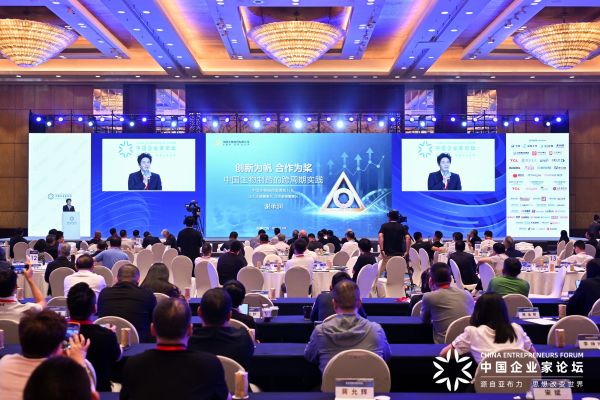
On September 5, the 22nd Summer Summit of the Yabuli China Entrepreneurs Forum (hereinafter referred to as Yabuli Forum) 2026 opened in Chengdu with the theme "Corporate Innovation and Overcoming Cycles". Eric Tse, Chief Executive Officer of Sino Biopharmaceutical Limited (SBP Group, 01177.HK) and Chairman of CTTQ Pharma and Beijing Tide Pharmaceutical, attended the opening ceremony and delivered a speech titled "Innovation as the Sail, Cooperation as the Oar: SBP Group's Practice of Overcoming Cycles". At the new council member induction ceremony, Eric Tse officially became a council member of the Yabuli Forum.
Currently, as the global industrial landscape is continuously being reshaped, technological revolutions are accelerating, and market volatility is intertwined with structural challenges, companies are entering a critical phase where they must proactively overcome cycles and reshape their growth logic. The biopharmaceutical industry is a typical long-cycle industry, and Eric Tse stated that SBP Group has fully experienced the journey of the Chinese pharmaceutical industry from its inception to development, and from being a follower to a parallel runner and now a leader. It is not only a participant and contributor to the industry's development but also has always been an explorer of innovative transformation.
Forging Counter-Cyclical Capabilities with Systematic Innovation
"A cycle is not a recession, nor is it a crisis, but a new opportunity." Eric Tse said, "Technology will continue to evolve, demand will continue to upgrade, and innovation is the only hard currency that can traverse all cycles. A company capable of achieving counter-cyclical growth does not predict when the next storm will arrive, but rather builds a ship that can sail continuously regardless of the size of the waves through "systematic innovation." "AI and internationalization" are the two important anchors for SBP Group to forge its counter-cyclical capabilities.
From 2015 to 2025, the Chinese pharmaceutical industry went through a "Decade of Innovation" cycle; in 2026, China's pharmaceutical industry is entering a new cycle of "original innovation-led" development, where source innovation, global markets, and technology-driven approaches are forming a new growth logic. Entering 2026, biopharmaceuticals have been clearly listed by the state as an "emerging pillar industry", and policy-level support for innovative drugs is continuously increasing. In the first half of the year alone, the total value of out-licensing deals for China's innovative drugs reached 80% of the full-year total for 2025, and China's pharmaceutical industry has become deeply integrated into the global innovation network. Traditional drug R&D faces the "rule of tens" challenge of high costs of approximately 2.6 billion USD and a long cycle of up to 10 years, and the technological revolution brought by AI is becoming the "window" to break this challenge."
All In AI: Restructuring Innovation Efficiency Internally
SBP Group is a pioneer in China's AI-powered drug discovery field, being one of the first to make large-scale investments. Over the past three years, the company has invested 600 million RMB to build its AI capabilities, promoting the application of AI from a single-point tool to the entire chain of R&D, production, and management. It has also collaborated with technology companies such as Huawei and ByteDance, while investing in AI-powered pharmaceutical companies like Insilico Medicine, XtalPi, and METiS TechBio to continuously improve the technological and industrial ecosystem.
Currently, SBP Group's AI-assisted drug development covers six major platforms: small molecules, antibody-drug conjugates (ADC), small interfering RNA (siRNA), OAPD, molecular glues, and tumor microenvironment (TME), empowering 25 pipelines in the early research stage and 37 pipelines in the clinical stage. This includes the innovative Chronic Obstructive Pulmonary Disease (COPD) drug TQC3721, which was licensed to AstraZeneca this year for a total transaction value of 1.9 billion USD. For SBP Group, AI is no longer a "future card" but is continuously materializing into faster R&D speed, greater clinical value, and better resource allocation.
Eric Tse stated that looking towards the AI 3.0 era, by systematically organizing clinical data, multi-omics, spatial transcriptomics, cell perturbation, and literature evidence, disease models that more closely resemble real biological systems will be constructed. This means that AI is no longer just an "efficiency-assisting tool" in early R&D and clinical stages but has directly become the "gateway" to source innovation.
Internationalization: Opening Up Growth Space Externally
If AI is about restructuring innovation efficiency internally, then internationalization is about opening up new growth spaces.
Since the beginning of this year, SBP Group has successively reached licensing agreements with Sanofi and AstraZeneca for rovacitinib and TQC3721, with a total transaction value of approximately 3.5 billion USD. In terms of in-licensing, the company has in-licensed bepirovirsen from GSK, an innovative drug with the potential to achieve a functional cure for hepatitis B, as well as two innovative drugs in the respiratory field, further enriching its globalized innovation pipeline.
Through a two-way closed loop of "going global" and "bringing in", SBP Group is accelerating its integration into the global innovation network. Recently, the company launched its global brand, SBP Group, and is advancing towards becoming a global innovative drug company "rooted in science, driven by breakthrough innovation, and aimed at benefiting patients worldwide". Eric Tse stated that true internationalization is not just about pushing products into overseas markets, but more importantly, about enabling the R&D system to serve the clinical needs of China, the United States, Europe, and emerging markets, thereby enhancing the company's ability to withstand fluctuations in a single market through a more diversified market layout.
Embedding Innovation Capabilities into the Global Network
"Overcoming cycles relies not only on one's own efforts but also on broad cooperation to drive growth, replacing zero-sum games with deep synergy," stated Eric Tse, "The next 10 years of the new cycle will be a decade of cooperation." The journey of a new drug from target discovery to market launch involves multiple stages such as basic research, translational medicine, clinical development, regulatory approval, manufacturing, and market access. Only by pooling the strengths of all parties in the industry chain can the puzzle of innovation capabilities be completed.
Over the past several years, SBP Group has established collaborations with over 30 global pharmaceutical companies and has continuously expanded its innovation landscape through the acquisition of companies such as HOB Biotech, LaNova Medicines, and Hygieia Pharmaceuticals. At the same time, it has co-established industrial funds with local governments in Shanghai, Jiangsu, and other regions to incubate ecosystem companies with "patient capital + industrial empowerment". The global R&D headquarters of CTTQ Pharma, a subsidiary of SBP Group, located in Shanghai, will also build an interdisciplinary and cross-industry innovation incubation park. This park will radiate across the Yangtze River Delta and coordinate with upstream and downstream partners to inject continuous momentum into industrial innovation.
Eric Tse stated that overcoming cycles depends on systematic capability building, the certainty built by the combination of technological depth, market breadth, and organizational resilience, and, even more so, on an open mindset for cooperation and a steadfast commitment to the long term. Facing the new industrial cycle, SBP Group will use innovation as its sail and cooperation as its oar. Driven by the twin engines of AI and internationalization, it will connect with global innovation resources, accelerate the translation of more breakthrough innovations into clinical applications, and bring more valuable treatment options to patients worldwide.
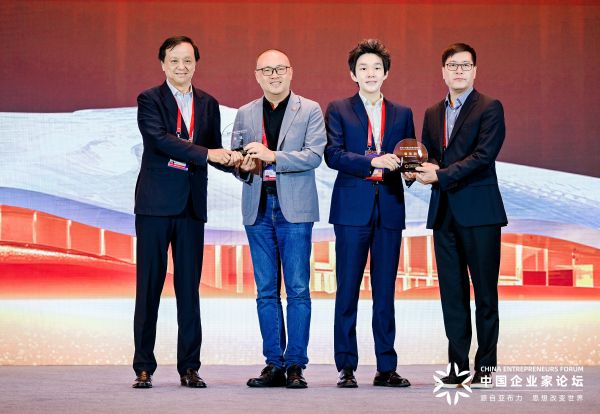
At the new council member induction ceremony, the rotating chair of the Yabuli Forum, Charles Li, founder and chairman of Micro Connect, and the co-chair of the Yabuli Forum, Michael Yao, the chairman and CEO of 58.com (Group), presented Eric Tse with his council member plaque, and Eric Tse officially became a council member of the Yabuli Forum.
Declaration:
The copyright of this article is owned by the original author or the Company. It may not be used by reprinting, copying, filming, adapting, compiling, or other means without authorization. The portrait rights of the individuals appearing in this article belong to the individuals themselves. Unauthorized use is prohibited.